 EAST INDICA™TeaEAST INDICA™Tea
In India, every joy begins with the same three words, “chai pe aa jao”. An old friend at the door, your mother's laugh, a rainy evening turning into a memory. The moment is yours; the cup is only the excuse. Some cups you drink. These, you remember.
Four cups the house reaches for first from the everyday kadak to the quiet single-origin chapters.
Follow the leaf, it travels with you as you scroll. From the hands that pick it at dawn to the laughter it steeps at your table, in one straight line.
ये नाम और कहानियाँ भारत की चाय-परंपरा को सम्मान देने के लिए बनाई गई हैं। ये किसी विशेष व्यक्ति का चित्रण नहीं हैं।
These names and stories are illustrative, created to honour India's tea-growing tradition. They are not depictions of specific individuals.
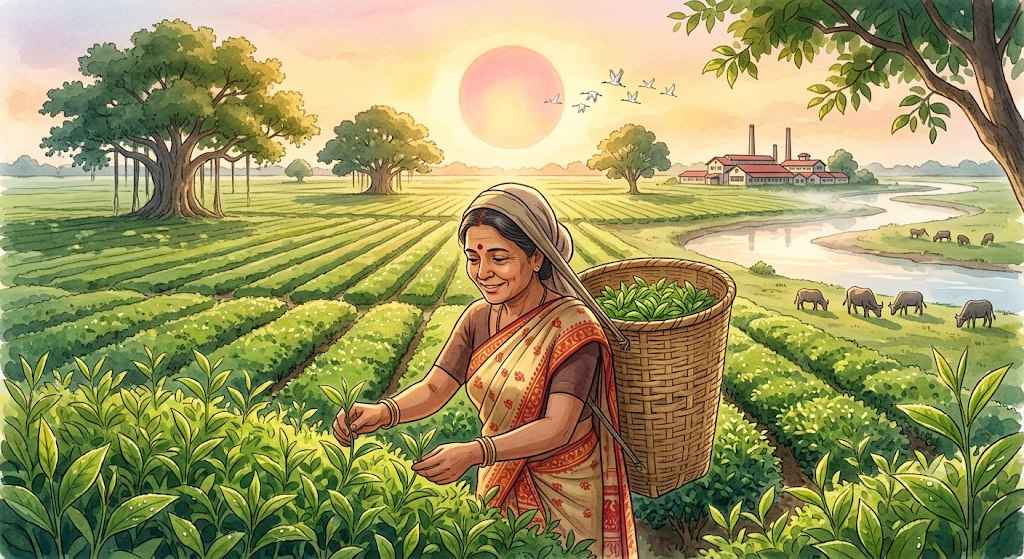
Before the mist lifts, lakhs of women are already among the bushes, two leaves and a bud, the way their grandmothers taught them. They sing Jhumur as they work, the old songs of the tea tribes. Your morning is picked by hand, and the celebration in your cup begins here, with theirs.
The Garden Chapters →A good leaf carries a whole season behind it, and the hands that pick it with care. We keep it small-batch and single-origin, garden by garden.
The trade route, reversed →The leaf travels one straight line, packed at origin, single-origin, sealed into its consignment, and shipped fresh to your door. That is how the garden reaches you whole.
See what arrives →Pure leaf steeped in water, the way the West is learning; kadak CTC with milk, the way India always knew. Either way, this is the world's oldest pause button.
Choose your chapter →An old friend rings the bell. A marriage is discussed, a deal is closed, a daughter comes home, the whole family gathers on Sunday. Wherever two people meet in India, chai arrives, it always has. The same leaf that met a farmer's hands at dawn now brings your people together.
Share a Milan Pack →Two hundred years ago, a company took the leaf from these gardens and sold it to the world, and the farmers saw almost none of it. We keep it small-batch and single-origin, and are building real, direct relationships with the growers, garden by garden.
Every batch is small, seasonal, and sourced from the gardens of Assam, Darjeeling and Nilgiri. We buy small, seasonal lots and name the garden on every pack. No additives, no anonymous blends, just pure leaf, chosen with care.
The Garden Chapters →Each garden is a chapter of our story, and each chapter has a keeper. Before a single leaf reaches your cup, it passes through their hands, at that first joy, at dawn.
The names, portraits and stories here are illustrative, created to honour India’s tea-growing tradition, not depictions of specific individuals. As we build direct relationships and visit the gardens, we’ll share the real growers’ stories.
Devika has plucked tea since she was eleven, the same two-leaves-and-a-bud rule her grandmother taught her on this same hillside. She's at the bushes by 6 AM, before the mist lifts, because the leaf is sweetest with the dew still on it. "City people ask if it's hard work," she says, tying off another basket. "I tell them, hard work is fine, when the price is fair and the buyer comes back next season." We do.
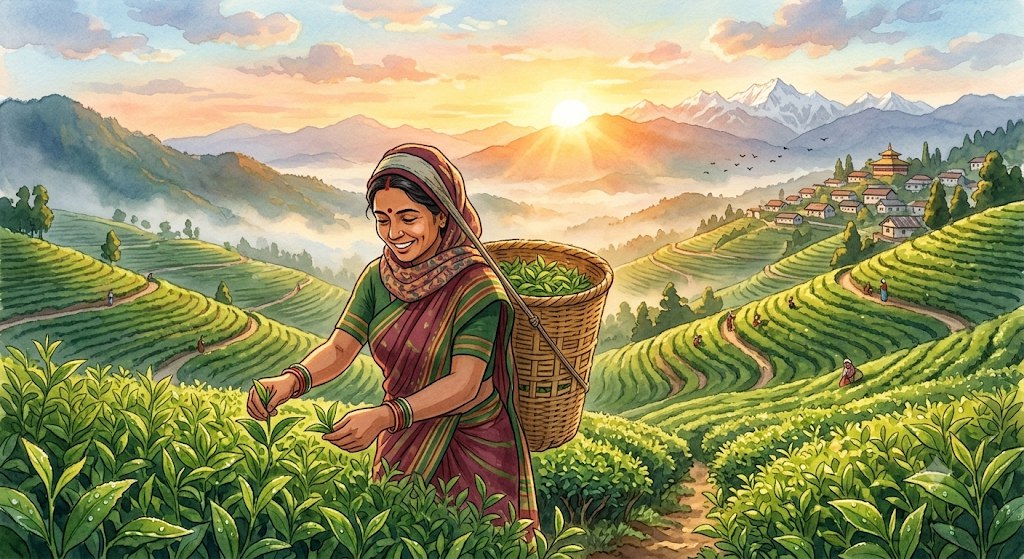
The first flush only lasts a few weeks, and Pema treats every one like it might be her last good harvest, at this altitude, an early hailstorm can wipe out a season overnight. She still hand-rolls a small batch the way her mother did, just to taste it herself before it ships. "Machines are faster," she shrugs, "but my mother's hands knew when the leaf was ready. Mine do too now."
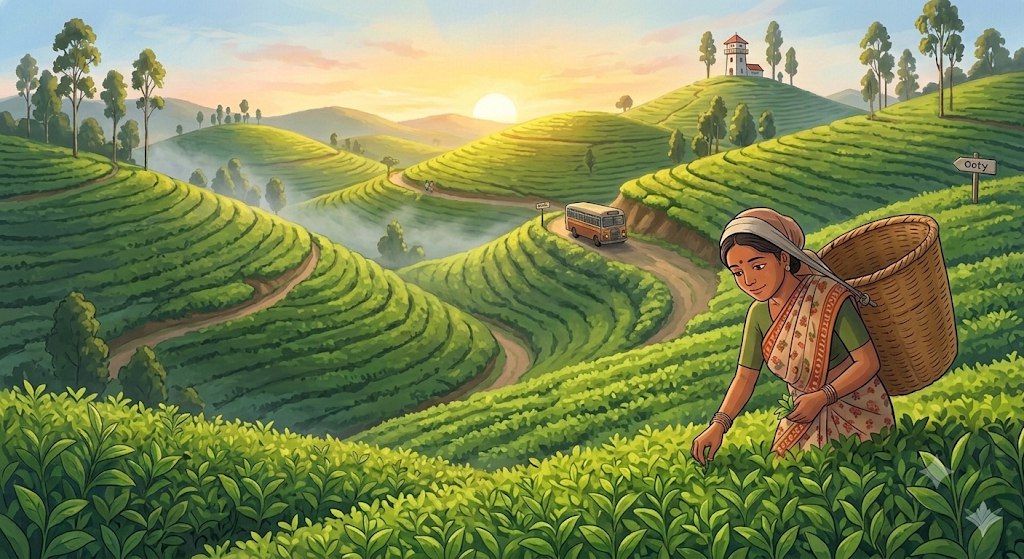
Selvi's family co-operative supplies smallholder gardens too small for the big estates to bother with, half an acre here, an acre there, terraced into the hillside. "Alone, none of us could sell direct," she says. "Together, we could finally ask for what the leaf is worth." She remembers what it took to get here.